

Learn proper shot blasting machine work instructions including safety rules, operating steps, maintenance tips, and precautions to ensure efficient and safe industrial blasting.
Safe Shot Blasting Machine Work Instruction
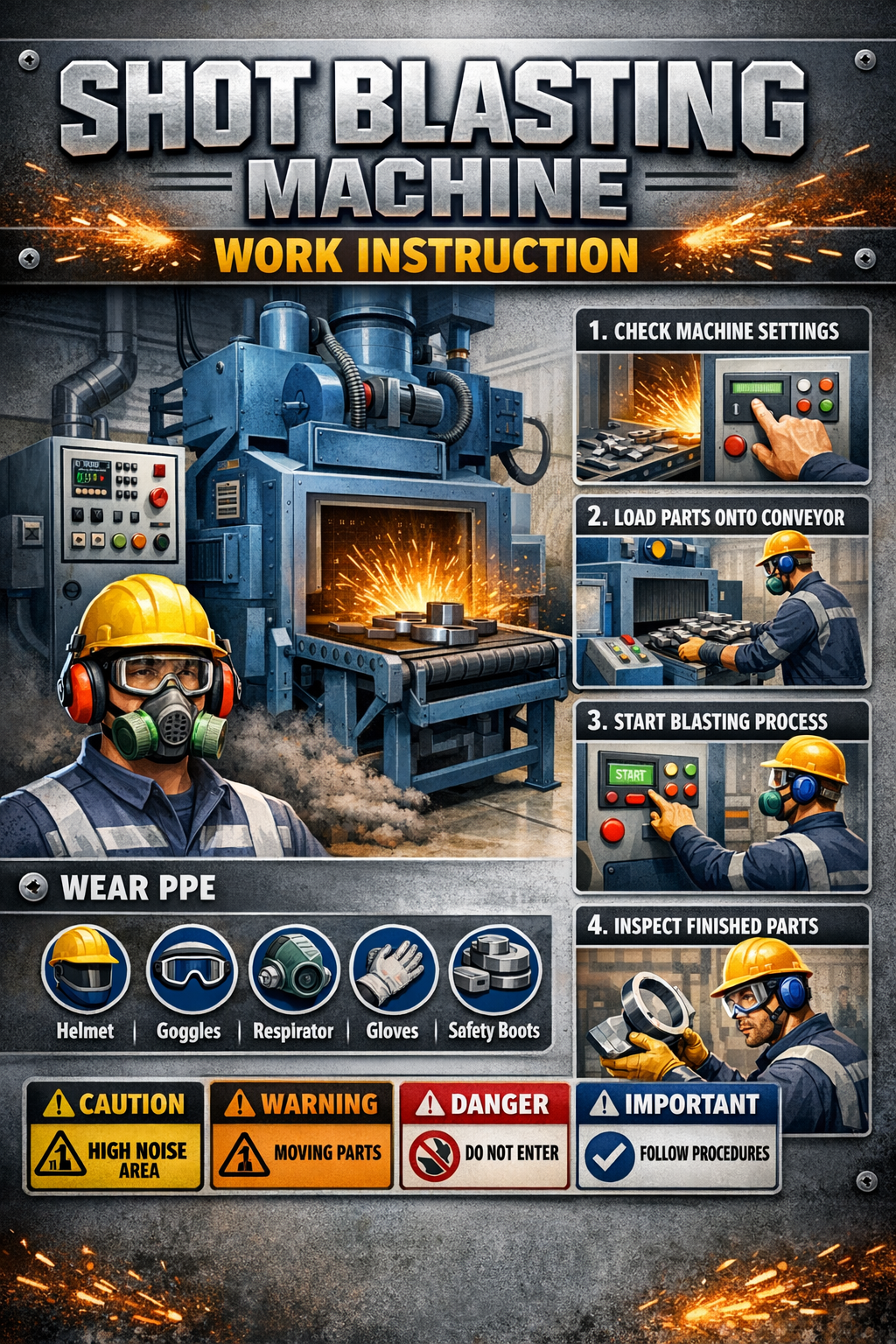
Image Source - Chatgpt / Created by Amar Singh
In modern manufacturing and fabrication industries, shot blasting machines play a significant role in surface preparation, rust removal, and finishing processes. However, the efficiency of a shot blasting machine does not depend only on its design and technology but also on proper work instructions followed by the operator. A well-defined operating procedure not only improves productivity but also ensures workplace safety and machine longevity.
This article explains the essential work instructions of a shot blasting machine in a structured and practical manner, covering preparation, operation, safety measures, and maintenance practices.
Understanding the Purpose of Shot Blasting Machines
Before operating any industrial equipment, it is important to understand its purpose. A shot blasting machine is primarily used to clean metal surfaces, remove corrosion, eliminate scale, and prepare surfaces for coating or painting. The machine works by propelling abrasive media such as steel shots or grits at high velocity onto the surface of a workpiece.
This process improves surface strength, enhances coating adhesion, and increases the durability of metal components. Due to the high-speed mechanical operation involved, it becomes essential to follow proper work instructions to avoid operational hazards and achieve consistent results.
Pre-Operation Inspection Guidelines
The first and most important work instruction is to perform a detailed inspection before starting the machine. This step is often overlooked but plays a crucial role in preventing unexpected breakdowns and safety risks.
Operators should check the power connections and ensure that all electrical components are properly grounded. Any loose wiring must be fixed before operation. The abrasive storage hopper should be inspected to confirm that the correct type and quantity of abrasive media is available.
It is also necessary to examine the blast wheel, control cage, and blades for wear and tear. Damaged components may reduce blasting efficiency and create imbalance during operation. Air pressure systems, dust collectors, and filters must also be checked to ensure proper ventilation and dust control.
Another important instruction is to verify that all safety guards and machine doors are properly closed and locked before starting the machine.
Standard Operating Procedure for Shot Blasting Machine
Following a step-by-step operating procedure ensures smooth and safe machine performance. The process should always begin by switching on the dust collector system. This prevents dust accumulation during the blasting process.
After that, the conveyor system or work handling mechanism should be started. Once the movement system is stable, the blast wheel motor can be switched on. Abrasive flow should be gradually introduced rather than started at full capacity.
During operation, the operator must monitor vibration levels, unusual noises, and blasting patterns. Any abnormal sound may indicate internal wear or imbalance. The operator should also ensure that the workpieces are properly placed to achieve uniform blasting results.
Website -
- https://www.airoshotblast.in/
- https://www.shotblastingmachines.in/shot-blasting-machine
- https://www.sandblastingmachine.in/shot-blasting-machine/shot-blasting-machine
- https://www.sandblast.in/product/shot-blasting-machine-manufacturers
- https://www.shotblast.in/
- https://shotsblastingmachine.com/
It is strongly recommended that operators never open the machine cabinet while the blasting process is active. Emergency stop buttons must remain easily accessible at all times.
Essential Safety Instructions for Operators
Safety is an integral part of shot blasting machine work instructions. Since the process involves high-speed abrasives and mechanical movement, personal protective equipment (PPE) is mandatory.
Operators should wear safety gloves, protective goggles, ear protection, and industrial safety shoes. In manual blasting environments, blast suits and respiratory masks are also recommended.
Another critical safety instruction is proper training. Only trained personnel should be allowed to operate the machine. Unauthorized operation may lead to accidents and equipment damage.
Work areas must remain clean and free from obstacles. Proper lighting should be maintained around the machine to ensure visibility. Warning signs and safety instructions should be clearly displayed near the equipment.
In case of any emergency, the machine must be stopped immediately using the emergency shutdown system. Maintenance work should only be performed after complete power isolation.
Maintenance Instructions for Better Machine Performance
Routine maintenance is a key instruction that ensures long-term machine efficiency. Preventive maintenance reduces repair costs and improves operational reliability.
Daily maintenance should include cleaning the machine exterior, checking abrasive levels, and inspecting dust collectors. Weekly inspections should include checking blast wheel components, liners, and rubber curtains for wear.
Lubrication of moving parts such as bearings and conveyors should be performed as per manufacturer recommendations. Failure to lubricate components may result in friction damage and mechanical failure.
Periodic replacement of worn parts such as blast blades, control cages, and liners is also necessary. Ignoring worn parts may reduce blasting quality and increase power consumption.
Maintaining a maintenance logbook is also considered a good industrial practice. This helps track servicing schedules and detect recurring problems.
Also Check - Shot Blasting Machine Manufacturers, Shot Blasting Machine Manufacturers in India, Shot Blasting Machine Price, Shot Blasting Machine Price in India, Abrasive Shot Blasting Machine
Common Mistakes to Avoid During Operation
Many operational issues arise due to simple mistakes. One common error is overloading the machine beyond its capacity. This may affect blasting quality and damage internal components.
Another mistake is using incorrect abrasive size or poor-quality media. This can reduce cleaning effectiveness and increase machine wear. Operators should always use recommended abrasives.
Ignoring dust collector maintenance is also a major issue. A blocked dust collector reduces suction efficiency and creates environmental hazards.
Skipping pre-operation checks and irregular maintenance are also common problems that reduce machine lifespan. Following standard work instructions helps eliminate these issues.
Conclusion
Proper work instruction is the foundation of efficient and safe shot blasting machine operation. From pre-inspection and systematic operation to safety compliance and routine maintenance, every step contributes to productivity and equipment durability.
Industrial equipment delivers the best results when operated with discipline and technical awareness. Therefore, companies should always establish standard operating procedures and train their operators accordingly. By following structured work instructions, industries can achieve consistent surface finishing quality, improved safety standards, and reduced operational costs.
In conclusion, a shot blasting machine is not just a mechanical system but a precision tool that requires careful handling, technical understanding, and responsible operation. When proper instructions are followed, it becomes a highly reliable asset in any manufacturing environment.
Related Article - https://sites.google.com/view/airo-shot-blast/blog/shot-blasting-machine-all-parts-name-and-functions-guide